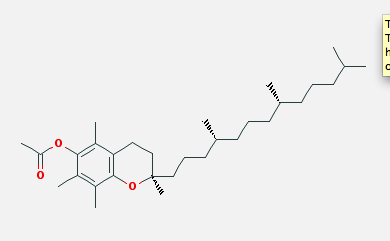
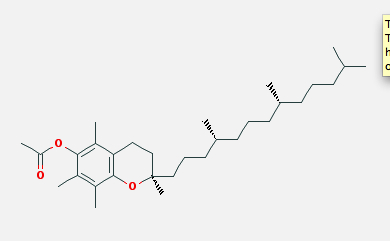
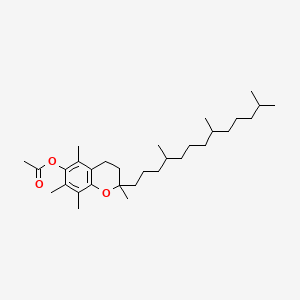
Tocopheryl Acetate
AKA “DL-alpha-Tocopherol acetate, 52225-20-4, all-rac-alpha-Tocopheryl acetate, (+-)-alpha-Tocopherol acetate, WR1WPI7EW8, Alpha-tocopherol acetate, dl-, [2, 5, 7, 8-tetramethyl-2-(4, 8, 12-trimethyltridecyl)-3, 4-dihydrochromen-6-yl] acetate, Tocopheryl Acetate, dl-Alpha, Alpha-tocopheryl acetate, J262.912G”
Synthetic
Tap what applies — every card instantly flags it for you. Stays on your device, syncs if you're signed in.
Ingredient Facts
Tocopheryl acetate
AKA: DL-alpha-Tocopherol acetate, 52225-20-4, All-rac-alpha-Tocopheryl acetate, (+-)-alpha-Tocopherol acetate, WR1WPI7EW8, Alpha-tocopherol acetate, Dl-, [2, 5, 7, 8-tetramethyl-2-(4, 8, 12-trimethyltridecyl)-3, 4-dihydrochromen-6-yl] acetate, Dl-Alpha, Alpha-tocopheryl acetate, J262.912G
Synthetic · Antioxidant · EWG: 3
Synthetic
Antioxidant
Skin Conditioner
Synthetic
Not Clean
Vitamin E Acetate is the acetate ester of a fat-soluble vitamin with potent antioxidant properties. Considered essential for the stabilization of biological membranes (especially those with high amounts of polyunsaturated fatty acid), vitamin E is a generic name for a group of compounds known as tocopherols and tocotrienols (tocols). This agent is a potent peroxyl radical scavenger and inhibits noncompetitively cyclooxygenase activity in many tissues, resulting in a decrease in prostaglandin production. Vitamin E also inhibits angiogenesis and tumor dormancy through suppressing vascular endothelial growth factor (VEGF) gene transcription. (NCI04)
Effective at 18.0%
Formula
C31H52O3
Mol. Weight
472.70
CAS #
7695-91-2, 58-95-7
Form
Oil
State
Pellets or Large Crystals, Liquid; Pellets or Large Crystals
See origin →
Functions
Antioxidant
Fights free radicals — the unstable molecules from UV, pollution, and stress that break down collagen and cause premature aging.
Skin Conditioning
A catch-all term for ingredients that improve how skin looks and feels — softer, smoother, more supple. The workhorse behind most moisturizers.
Neutralizes free radicals
Prevents moisture loss
Traditional Use
Vitamin E was identified in 1922; the acetate form was synthesized in the 1930s for improved stability in cosmetics. Became widely used in skincare and anti-aging products from the 1970s onward for its antioxidant properties.
Skin Types
●all-skin-types
Best For
Sun Damage
Pregnancy & Breastfeeding Safe
Yes
EWG
3
CIR
Safe
Pregnancy
Yes
CIR Safety Findings
Not a Sensitizer
all-shades-safe
Concentration Guide
1e-08%
36.0%
0%100%
Effective Range
CIR reported use: 0.0000009-5.4 | 0.001-2 | 0.00000001-36 | 0.001-36
Regulatory Agencies
3 Piece Classic Suncare Travel Set
COOLA
Liplux® Hydrating Lip Oil
COOLA
Clear Skin Oil-Free Moisturizer
COOLA
High Fidelity Brightening Concealer Stick
Exa Beauty
holi (cleanse) cleansing face oil and makeup remover
Agent Nateur
Autograph Matte Lipstick
Finding Ferdinand
Custom Blush
Finding Ferdinand
Delicious Balms
Finding Ferdinand
Photoshoot Red
Finding Ferdinand
Tender Blush
Finding Ferdinand
Firming Face Oil
COOLA
Arch Support Brow Powder Gel
Gen See
Clean Sheen Lip Gloss
Gen See
Mixed Media Liquid Eyeshadow
Gen See
Mixed Media Must Haves
Gen See
Pick Me Up Lip Matte Lipstick
Gen See
Seriously Jelly 24 Hour Hydrating Lip Color
Gen See
holi (lash) growth mascara
Agent Nateur
Balmy Tint Hydrating Lip Balm
ILIA Beauty
Color Block Lipstick
ILIA Beauty
Skin Rewind Complexion Stick
ILIA Beauty
BB Burst
Kosas
LipFuel Lip Balm
Kosas
Weightless Lip Color
Kosas
lactic acid cleanser duo
Agent Nateur
Aim High Highlighter Stick
LYS Beauty
Bright Start Creamy Buildable Airbrush Concealer
LYS Beauty
Higher Standard Cream Glow Blush Stick
LYS Beauty
Higher Standard Satin Matte Cream Blush
LYS Beauty
No Limits Cream Bronzer Stick
LYS Beauty
Secure Brow Eyebrow Pencil
LYS Beauty
Secure Brow Shape + Hold Clear Brow Gel
LYS Beauty
Speak Love Glossy Lip Treatment Oil
LYS Beauty
Speak Love Lip-Plumping Glossy Lip Balm
LYS Beauty
Speak Love Moisture Matte Lipstick
LYS Beauty
Smooth Precision Waterproof Lip Liner
MOB Beauty
The Neutrals Eye Essentials Palette
MOB Beauty
Refreshing Water Cream
COOLA
Back2Brow Powder
RMS Beauty
Legendary Serum Lipstick
RMS Beauty
Legendary Serum Lipstick: The Nudes
RMS Beauty
Royal Tulip Cleansing Jelly
Bloom Effects
Royal Tulip Vitamin C Facial Oil
Bloom Effects
Bestsellers Bundle
Saie
Complexion Boost
Saie
Skin Glow Duo
Saie
Slip Brush Duo
Saie
Slip Tint™ Tinted Moisturizer
Saie
Slip Tint™ Undetectable Baked Setting Powder
Saie
Sunvisor™
Saie
Final Report on the Safety Assessment of Tocopherol, Tocopheryl Acetate, Tocopheryl Linoleate, Tocopheryl Linoleate/Oleate, Tocopheryl Nicotinate, Tocopheryl Succinate, Dioleyl Tocopheryl Methylsilano
Cosmetic Ingredient Review (CIR) Expert Panel
International Journal of Toxicology
Ascorbyl Tocopheryl Acetate
European Commission
EU Cosmetic Ingredient Database (CosIng)
Tocopheryl Acetate
Environmental Working Group (EWG)
EWG Skin Deep Cosmetics Database
Uptake and bioconversion of alpha-tocopheryl acetate to a...
E P Norkus, G F Bryce, H N Bhagavan
Photochemistry and photobiology, 1993
Uptake and bioconversion of alpha-tocopheryl acetate to a...
E P Norkus, G F Bryce, H N Bhagavan
Photochemistry and photobiology, 1993
Uptake and bioconversion of alpha-tocopheryl acetate to a...
E P Norkus, G F Bryce, H N Bhagavan
Photochemistry and photobiology, 1993
Final report on the safety assessment of Tocopherol, Tocopheryl Acetate, Tocopheryl Linoleate, Tocopheryl Linoleate/Oleate, Tocopheryl Nicotinate, Toc
Zondlo Fiume M
International journal of toxicology, 2002
Final report on the safety assessment of Tocopherol, Tocopheryl Acetate, Tocopheryl Linoleate, Tocopheryl Linoleate/Oleate, Tocopheryl Nicotinate, Toc
Zondlo Fiume M
International journal of toxicology, 2002
Final report on the safety assessment of Tocopherol, Tocopheryl Acetate, Tocopheryl Linoleate, Tocopheryl Linoleate/Oleate, Tocopheryl Nicotinate, Toc
Zondlo Fiume M
International journal of toxicology, 2002
Final report on the safety assessment of Tocopherol, Tocopheryl Acetate, Tocopheryl Linoleate, Tocopheryl Linoleate/Oleate, Tocopheryl Nicotinate, Toc
Zondlo Fiume M
International journal of toxicology, 2002
Final report on the safety assessment of Tocopherol, Tocopheryl Acetate, Tocopheryl Linoleate, Tocopheryl Linoleate/Oleate, Tocopheryl Nicotinate, Toc
Zondlo Fiume M
International journal of toxicology, 2002
Final report on the safety assessment of Tocopherol, Tocopheryl Acetate, Tocopheryl Linoleate, Tocopheryl Linoleate/Oleate, Tocopheryl Nicotinate, Toc
Zondlo Fiume M
International journal of toxicology, 2002
Final report on the safety assessment of Tocopherol, Tocopheryl Acetate, Tocopheryl Linoleate, Tocopheryl Linoleate/Oleate, Tocopheryl Nicotinate, Toc
Zondlo Fiume M
International journal of toxicology, 2002
Verified Jun 2026
Data: PubChem · CosIng · EWG · CIR